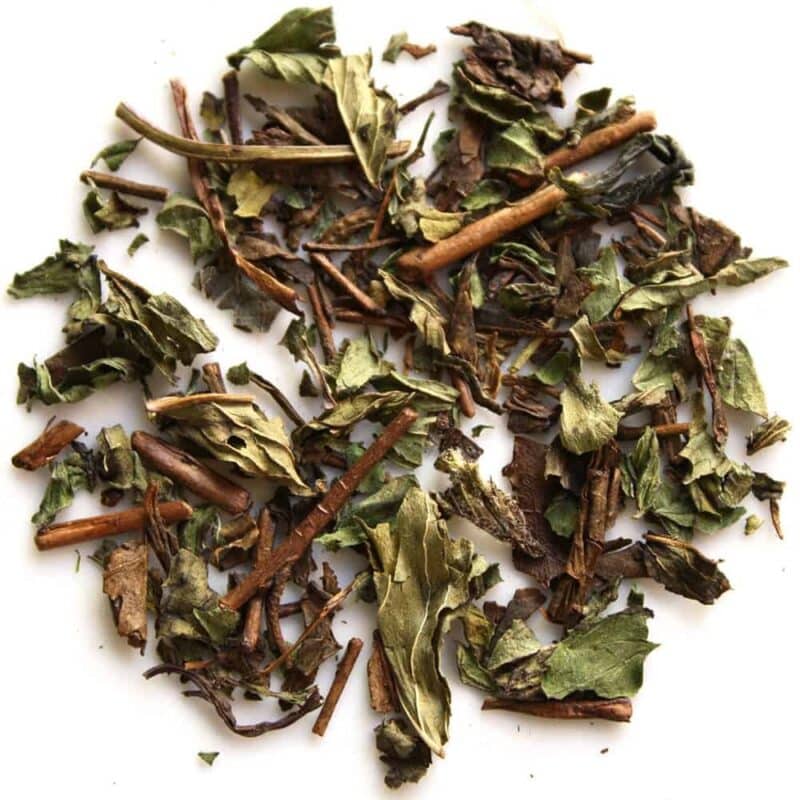
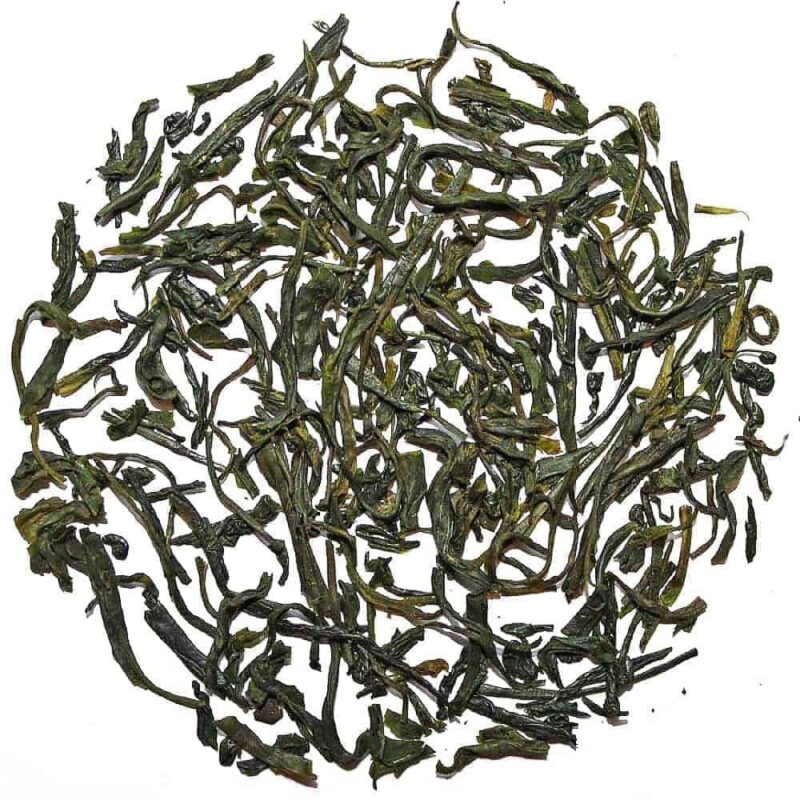
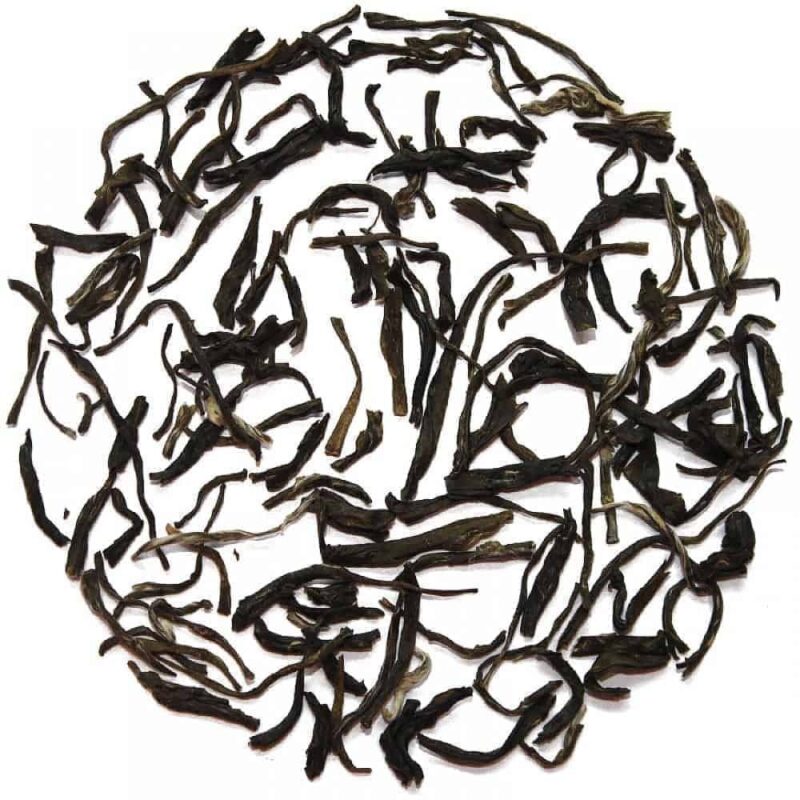
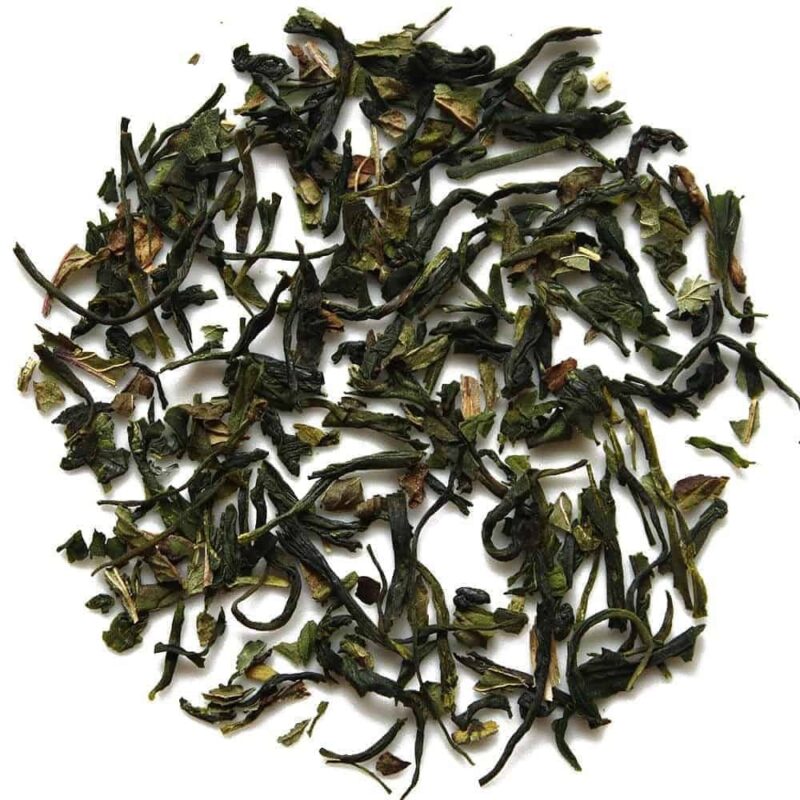
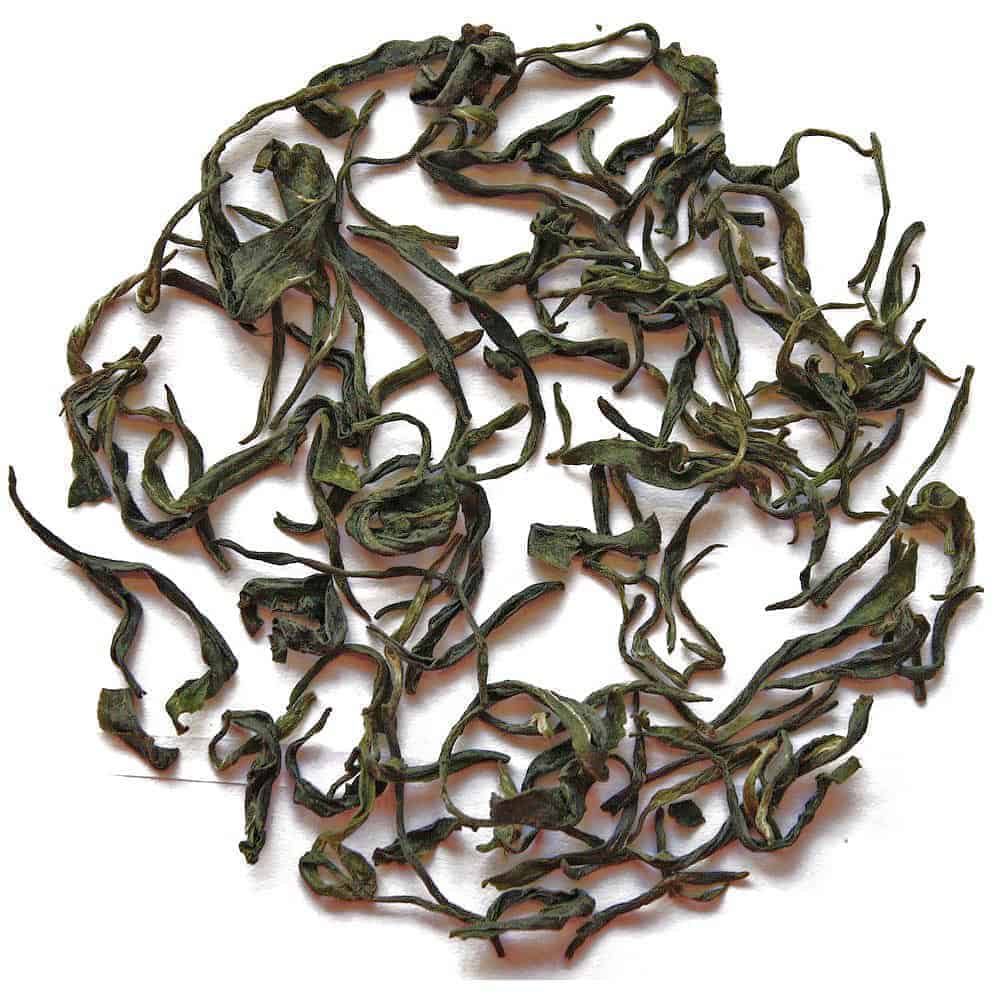
This Jungjak is a Korean green tea from a small family farm in Hwagae, Hadong, Korea, the area that produces the most traditional teas in Korea. The farm's teas have won the highly prestigious first prize in the area's tea festival. The family has its own stock of semi-wild bushes (locally this type of tea is called yaseang-cha: wild tea), and their teas are hand-picked and made entirely by hand. In Korea, teas are divided into four categories corresponding to the harvest periods: ujeon, sejak, jungjak and daejak (daejak denotes all harvests that take place after the jungjak harvest and therefore includes simpler qualities). These are organised according to the lunar calendar, which is also the basis for China's harvest periods. Jungjak thus denotes the third picking in spring.
Korean tea is relatively unknown in the West, and what is most commonly exported are mass-produced teas of varying quality. These teas are usually steamed, largely because steaming is easy to do on a large scale. Commercially produced Korean teas may be hand-picked, but they are generally never made by hand. In addition, commercially adapted subspecies are used. The tea farm practises sustainable agriculture and does not use pesticides or artificial fertilisers.
Origin: Hwagae, Hadong, South Korea. Harvest: Jungjak 2024.
Infusion
Quantity / 250 ml 2,5-3 g
temperature 70-80°C
Infusion 2-3 minutes
Jungjak lends itself well to multiple infusions. The second infusion is best kept short, as the leaves have already started to open and release their flavours. Subsequent infusions, on the other hand, should be left to rest a little longer to allow the flavours to deepen and the nuances to emerge. For many teas, two or three infusions with the above parameters are enough, but some keep on giving, cup after cup.


 Quantity / 250 ml
2,5-3 g
Quantity / 250 ml
2,5-3 g
 temperature
70-80°C
temperature
70-80°C
 Infusion
2-3 minutes
Infusion
2-3 minutes